You know that moment when you realize you’re doing the thing again? Maybe it’s snapping at your partner, shutting down in an argument, or scrolling until 2am even though you swore you’d get some sleep this time.
That split-second awareness can feel discouraging—like, ugh, here I am again.
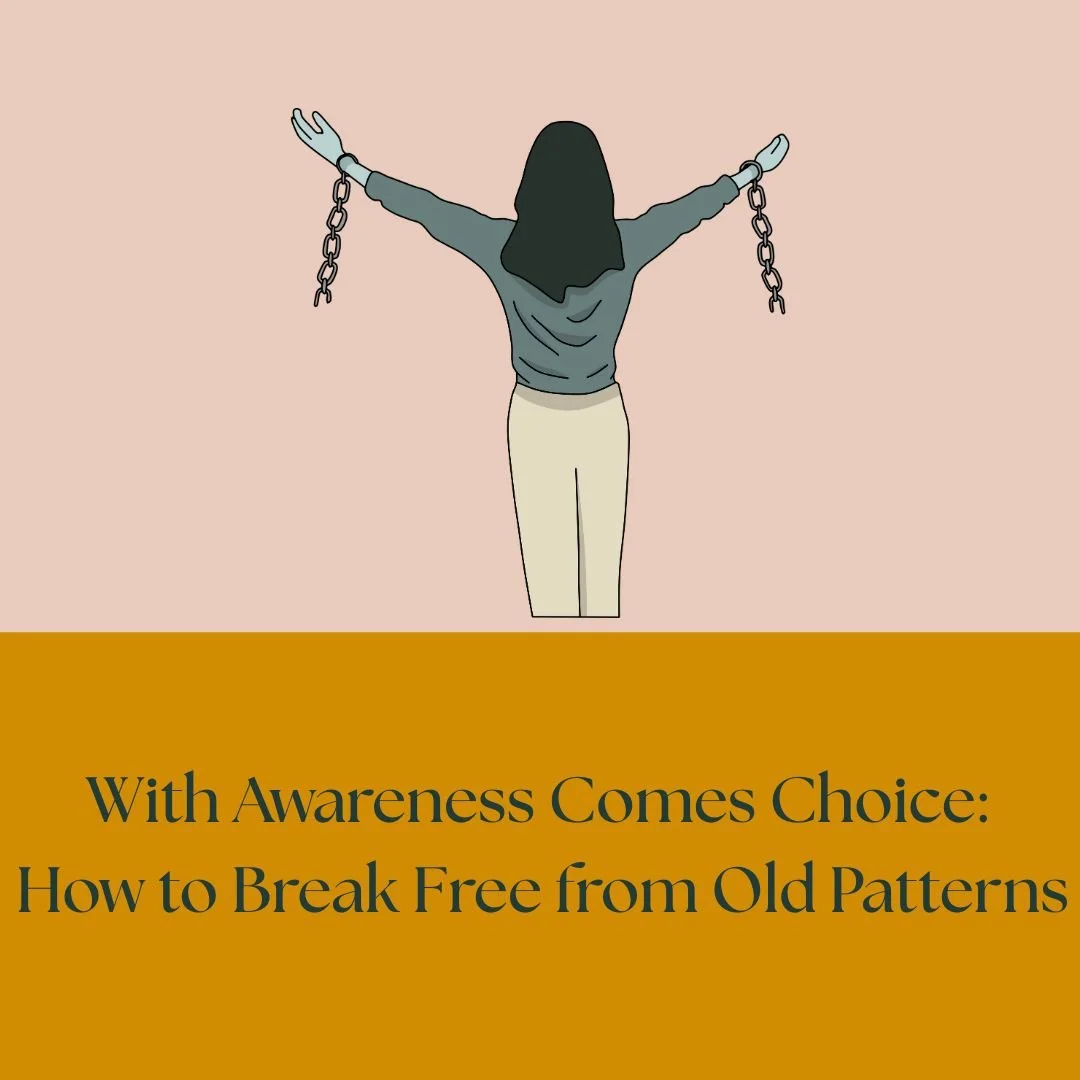
But here’s the secret: awareness isn’t failure. It’s freedom.
Why Awareness Matters (Even When It’s Annoying)
I hear it all the time in therapy: “Great, now I’m aware… but when do I actually start feeling better?”
It’s a fair question. Awareness doesn’t automatically make everything better. In fact, it can feel like an unwanted spotlight on patterns you’d rather not think about.
But here’s why awareness is still a game-changer:
You can’t change what you can’t see. Naming the pattern makes it possible to shift it.
Awareness interrupts autopilot. Even if you don’t do anything different yet, you’ve loosened the grip of old habits.
Awareness creates choice. That’s the key: awareness opens up the possibility of responding differently.
What Are “Choice Points”?
Choice points are those little moments when you recognize you’re in an old pattern and—just for a second—you have the chance to choose something new.
Think about it like this:
You feel the urge to shut down during a tough conversation. Awareness gives you the option to take a breath, name what’s happening, and stay present.
You notice your chest tighten before sending a text you’ll regret. That pause is a choice point—you can choose not to hit send.
You catch yourself spiraling into self-criticism. Instead of diving headfirst, you can choose to ground yourself with compassion.
These aren’t huge, dramatic moments. They’re subtle, often fleeting. But string enough of them together, and you start to carve out a new way of living.
Why Old Patterns Feel So Sticky
Here’s the thing: patterns—especially ones tied to trauma—aren’t just habits. They’re survival strategies.
Your brain and body learned them for a reason: to keep you safe in overwhelming moments. That’s why breaking free can feel so frustratingly hard.
The good news? With trauma-informed therapy, you can:
Understand where those patterns come from (without shame).
Learn new adaptive coping skills.
Practice noticing choice points and responding differently until it feels natural.
How to Start Breaking Free
Here are some small, doable ways to start working with awareness in your daily life:
Name it. When you notice a pattern, try saying: “I’m noticing this.” That acknowledgment alone is powerful.
Pause before reacting. Even one deep breath or counting to three can create space for choice.
Choose tiny shifts. You don’t need to overhaul your life at once. Small changes matter.
Practice compassion. Awareness isn’t proof you’re failing—it’s proof you’re growing.
The Takeaway
Awareness can feel uncomfortable, but it’s the doorway to freedom. Every time you notice a choice point, you’re building the capacity to step out of survival mode and into intentional living.
Therapy is where this process deepens. Together, we can uncover the roots of old patterns, build new coping skills, and strengthen your ability to choose responses that truly serve your wellbeing.
Because with awareness comes choice—and with choice comes freedom.